

NOTTING HILL CARNIVAL 2026: SIXTY YEARS OF COLOUR, MUSIC AND CELEBRATION
London’s most colourful weekend celebrated its Diamond Jubilee, bringing the streets of West London alive with music, dancing, spectacular costumes and the unmistakable spirit of Carnival.
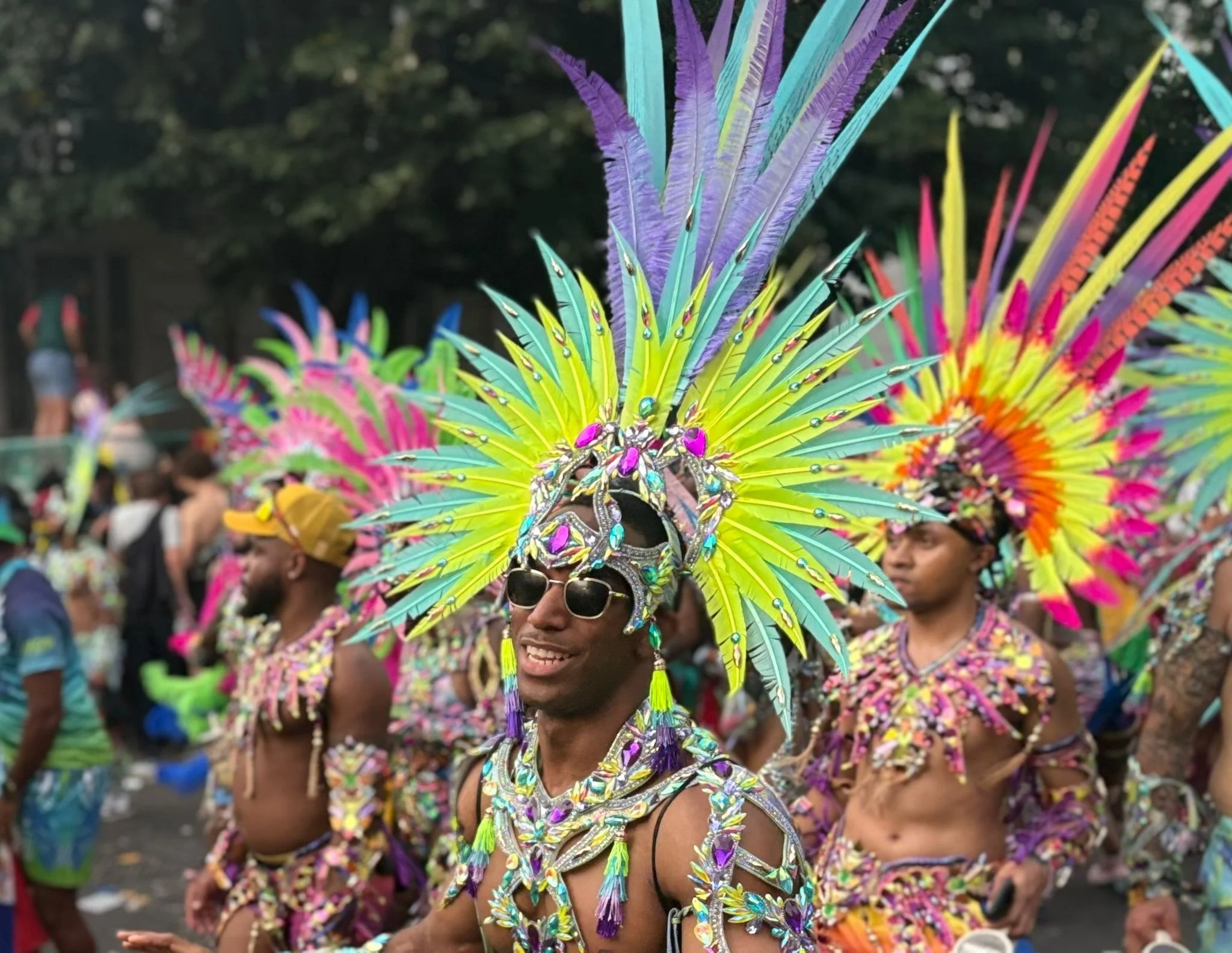
Photo Credit: Notting Hill Carnival, Lucy Ewington
Over the August Bank Holiday weekend, the streets of west London were transformed into a riot of colour, sound and movement as thousands of performers, musicians, dancers and visitors came together for one of the world’s most iconic celebrations.
This year was particularly special, as Notting Hill Carnival celebrated its 60th anniversary, marking six decades of Caribbean culture, creativity and community. From the UK National Panorama Steelband Competition on Saturday through to the main celebrations on Sunday and Monday, Carnival brought an extraordinary energy to London.
What made Notting Hill Carnival so enduring was its ability to feel both spectacular and deeply personal. It was a huge international event, yet at its heart remained a community celebration, one that had grown from its beginnings in the 1960s into Europe’s largest street festival. What started as a way of bringing a divided community together had become a joyful expression of Caribbean heritage and British multiculturalism.
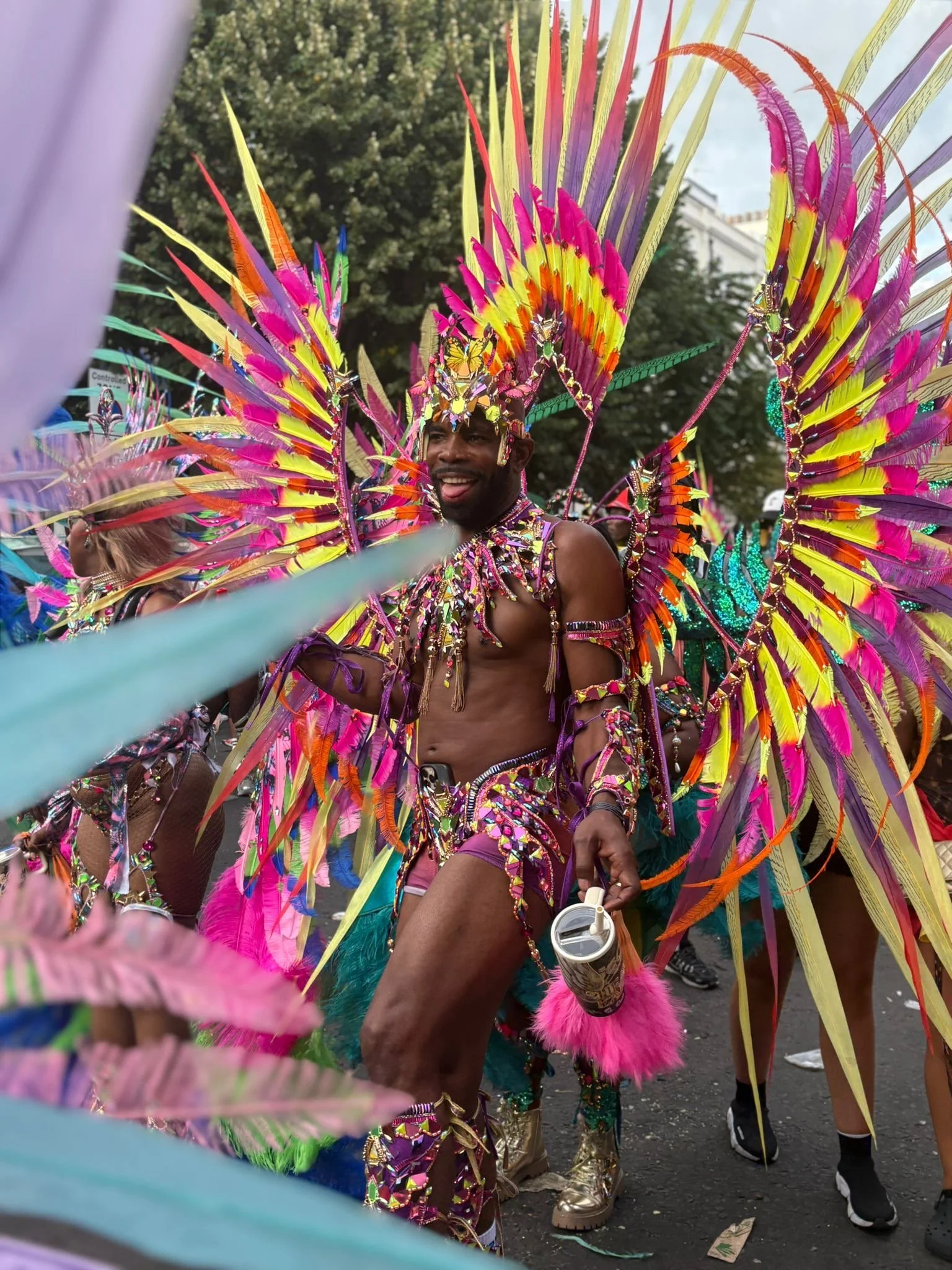
Photo Credit: Notting Hill Carnival, Lucy Ewington
And then there were the costumes. For many, seeing the Carnival parade was like watching an entire moving artwork unfold in front of them. Elaborate feathered headdresses, shimmering fabrics, jewel-like colours and intricate designs filled the streets, with many costumes taking months of preparation. As the Mas bands made their way through Notting Hill, the combination of colour, movement and music created a spectacle that simply could not be replicated anywhere else.
Music was equally central to the experience. From the unmistakable rhythm of steelpan and the infectious sounds of soca and calypso to reggae, dancehall and the legendary Carnival sound systems, music spilled out onto the streets. The sound systems, rooted in Jamaican culture, remained one of the defining features of Carnival, allowing visitors to move from one musical world to another as they explored the neighbourhood.
The dancing was impossible to resist. Whether joining a parade, following a Mas band or simply finding a spot beside the route, Carnival encouraged everyone to get involved. The streets became one enormous dance floor, with performers and spectators sharing the same sense of freedom, fun and celebration.
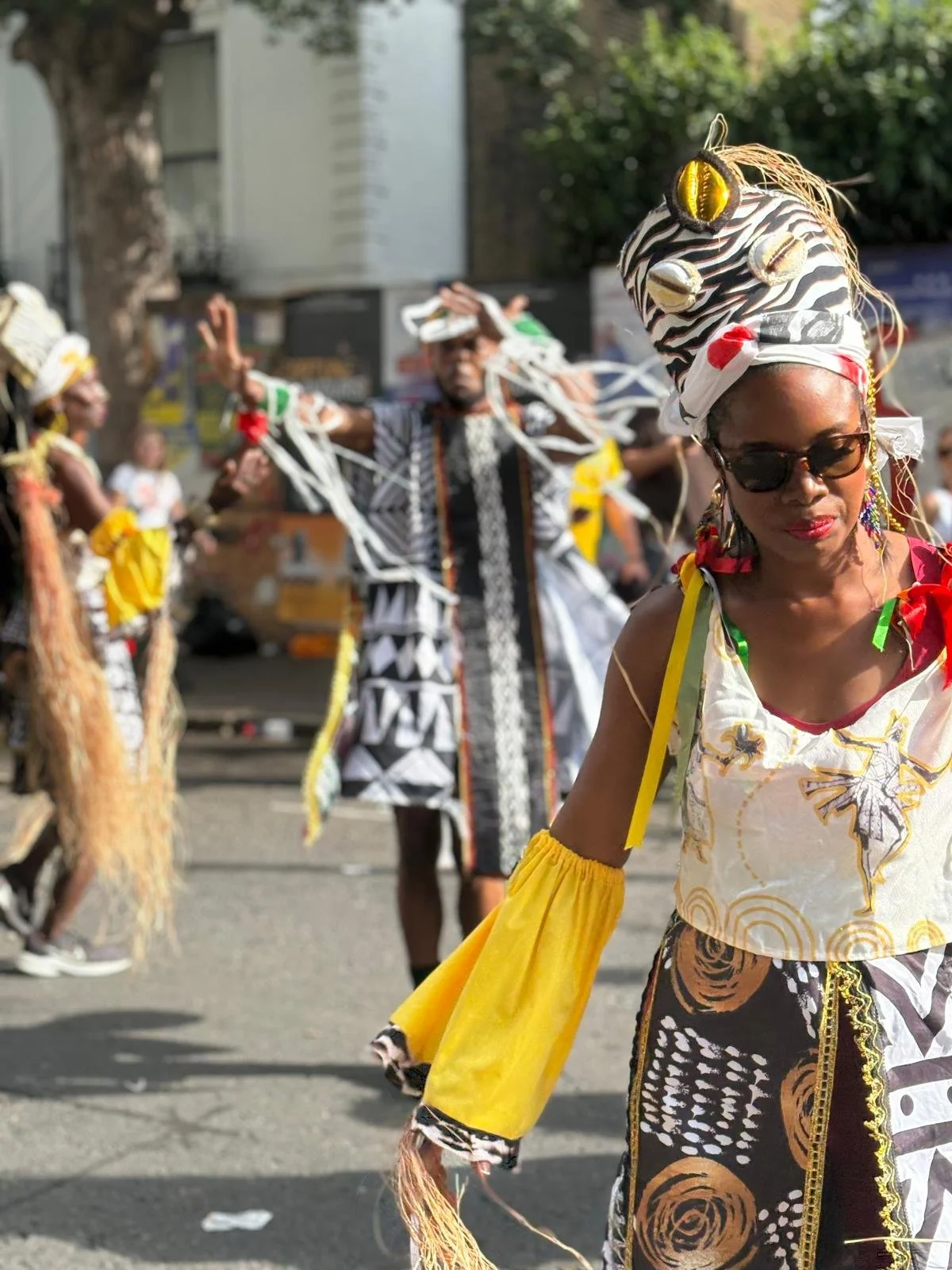
Photo Credit: Notting Hill Carnival, Lucy Ewington
Sunday brought the Children’s Day Parade, with the next generation of Carnival performers taking centre stage in their colourful costumes, while Monday saw the main Adults’ Parade and the climax of the weekend. Across both days, live stages and sound systems kept the party moving, creating an atmosphere that could be felt throughout the surrounding streets.
Of course, Carnival was about far more than what happened on the parade route. Food was an essential part of the experience, with the aromas of Caribbean cooking filling the streets. From jerk chicken and roti to plantain and traditional Caribbean dishes, the flavours of the Caribbean provided another colourful layer to the weekend.
Yet beneath all the music, dancing and spectacle was a much deeper story. Notting Hill Carnival was born from a desire to bring people together at a time when the local community was experiencing racial tension and division. Sixty years later, that message of unity remained just as relevant. The Carnival had evolved into a celebration not only of Caribbean heritage, but of London’s diversity and the power of culture to bring people together.
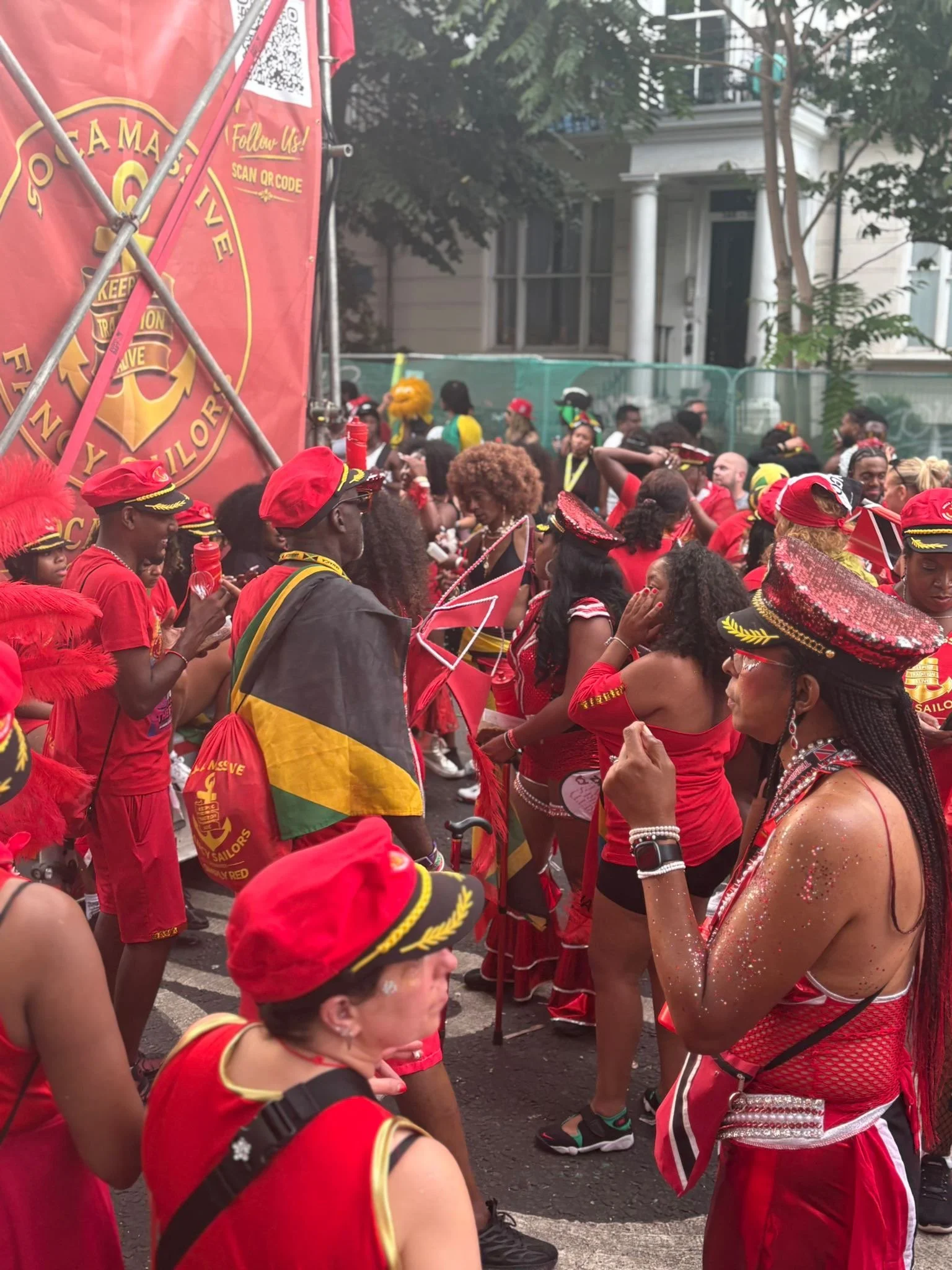
Photo Credit: Notting Hill Carnival, Lucy Ewington
There was also a moment of reflection during the weekend, with a 72-second silence at 3pm on Sunday and Monday remembering the 72 people who lost their lives in the Grenfell Tower fire, as well as members of the Carnival community who had passed away.
This combination of celebration and remembrance was part of what made Notting Hill Carnival so special. It was joyous without forgetting its history, spectacular without losing its community spirit, and enormous in scale while remaining rooted in the people and culture that created it.
After six decades, Notting Hill Carnival showed no signs of losing its magic. For one unforgettable weekend, west London became a kaleidoscope of feathers, sequins, steelpan, soca, dancing and laughter, a place where music poured from every corner and strangers became part of the same celebration.
Sixty years on, Notting Hill Carnival remained one of the greatest expressions of colour, culture and community in London, and once again proved that there was nowhere quite like it.