

ARCHES NATIONAL PARK, UTAH: NATURE’S GREAT SCULPTURE
There are some national parks you visit for the scenery, and then there are those that feel almost otherworldly. Arches National Park in Utah is very much one of them.
Just outside Moab, this extraordinary landscape is a vast, cinematic expanse of red sandstone, towering cliffs, immense fins, pinnacles and naturally formed arches, shaped over millions of years by wind, water, ice and time. It feels less like a traditional national park and more like an enormous outdoor gallery, only here, the sculptures are on a monumental scale.
And the numbers are extraordinary. Arches is home to more than 2,000 documented natural stone arches, the highest concentration of natural stone arches in the world. They range from tiny openings in the rock to enormous formations spanning more than 300 feet. The park itself covers around 76,500 acres, creating a landscape that feels vast even when you are standing beneath one of its most famous formations.
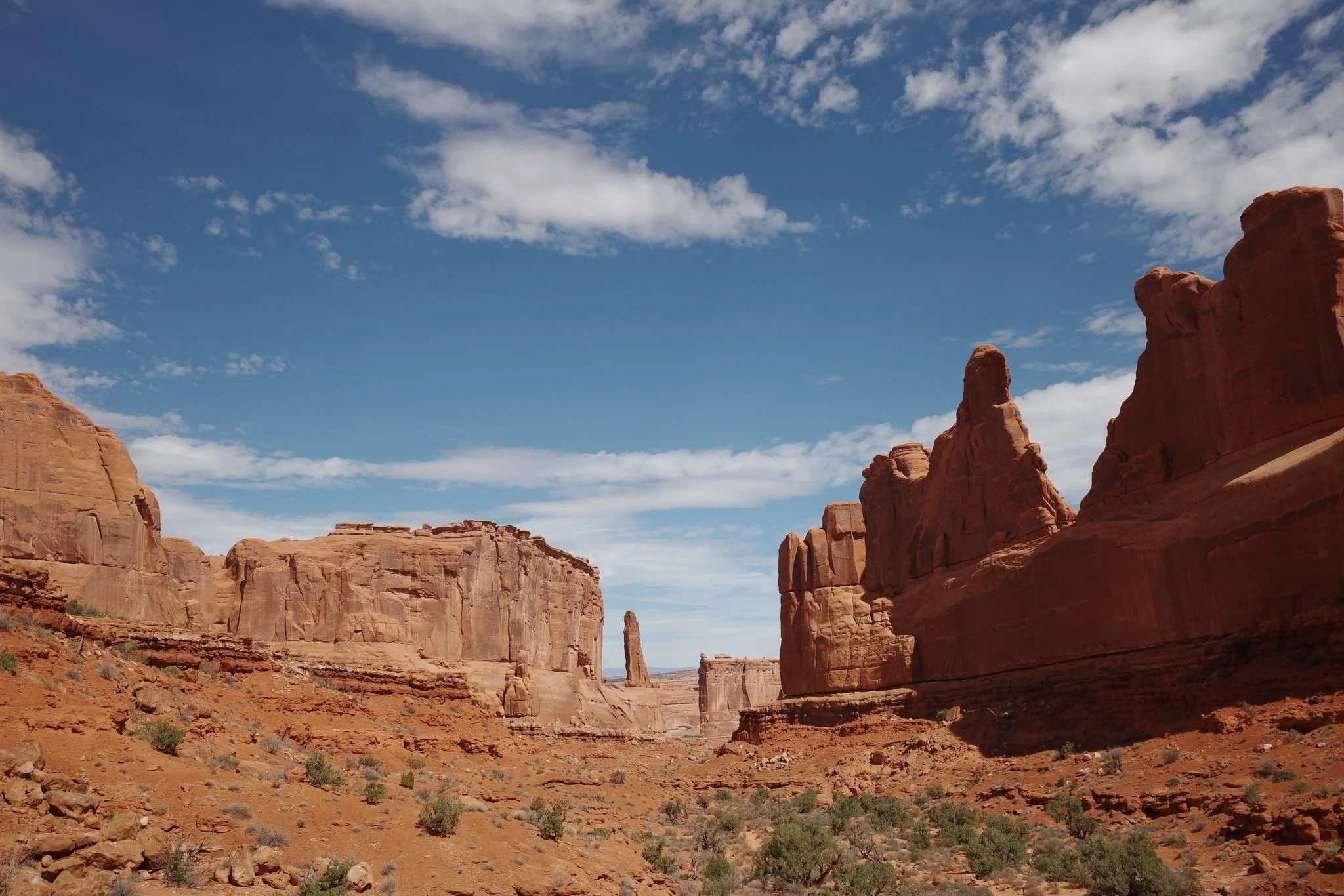
Photo Credit: Arches National Park, The Culture Digest
The colours alone are reason to visit. Rust reds, burnt oranges and warm sandstone shift constantly with the changing light, set against impossibly blue skies and the distant peaks of the La Sal Mountains, which rise dramatically to the southeast. At sunrise and sunset, the landscape becomes particularly spectacular, with the rock formations glowing in shades of amber, copper and deep red.
The real wonder of Arches is that its extraordinary formations are not simply beautiful, they tell the story of an astonishing geological process.
Much of the park's sandstone was originally deposited as enormous sand dunes around 140 million years ago, when this part of Utah looked radically different from the desert landscape we see today. Over immense periods of time, layers of rock were buried, compressed and eventually exposed. Water then began working its way into cracks in the sandstone, gradually widening them and creating the fins, holes and arches that define the park today.
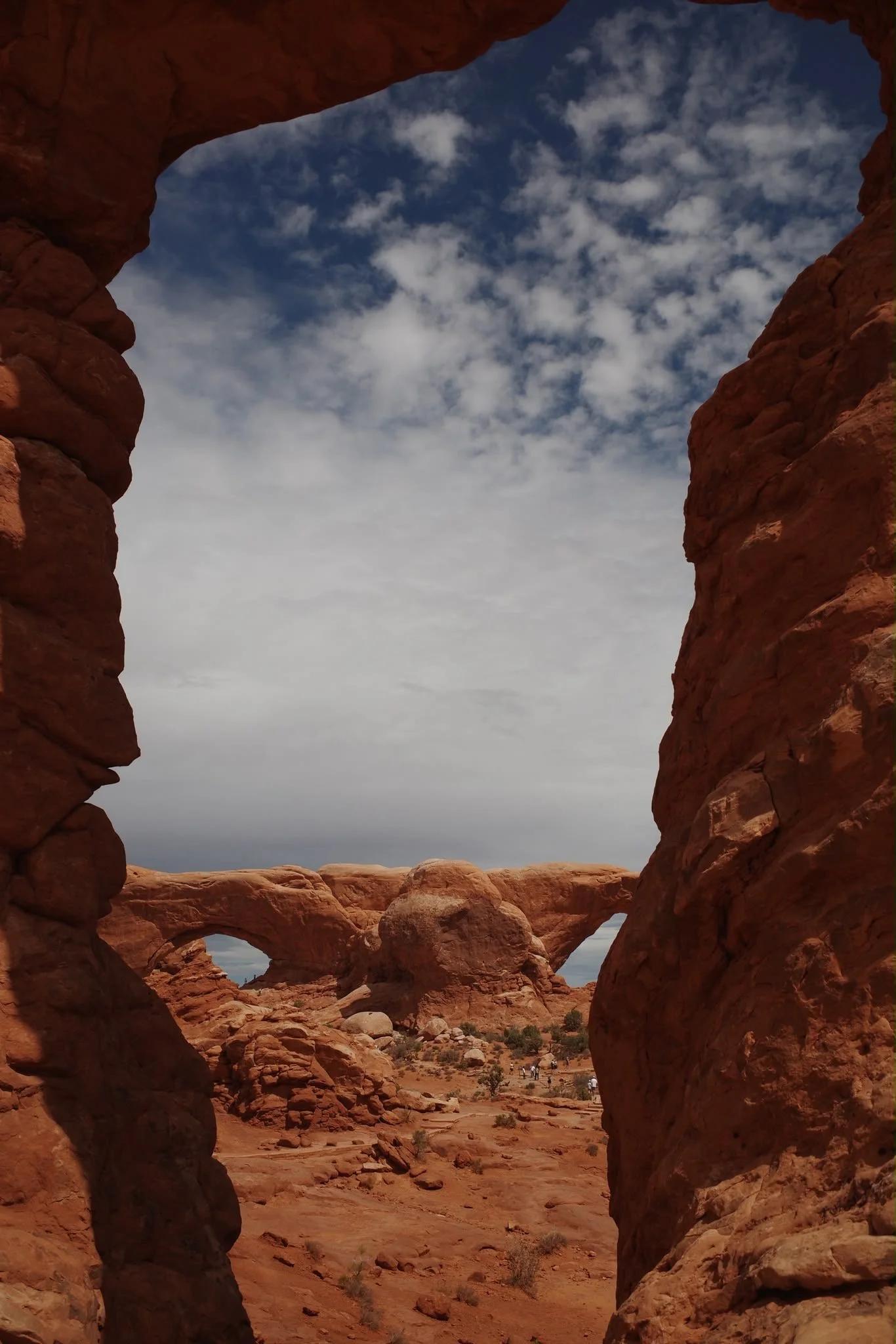
Photo Credit: Arches National Park, The Culture Digest
It is a process that is still happening. Arches National Park is not a finished sculpture gallery; it is constantly evolving. Some arches will eventually collapse, while new ones may begin to form elsewhere. The collapse of Wall Arch in 2008 was a striking reminder that even seemingly permanent landmarks are temporary when viewed against geological time.
Of all the formations, Delicate Arch is undoubtedly the star. The solitary sandstone arch has become an icon of Utah, appearing on the state's licence plate and featuring in imagery associated with the 2002 Winter Olympics. Its opening is 46 feet high and 32 feet wide, and its freestanding silhouette against the desert landscape has made it one of the most recognisable geological formations in America.
Then there is Landscape Arch, found in the Devils Garden area. With a span of 306 feet, it is one of the most spectacular natural arches in North America – and astonishingly slender in places. At its narrowest point, the sandstone is only around six feet thick. Large sections fell from the arch during the 1990s, demonstrating just how fragile these seemingly monumental structures can be.
The Windows Section offers another of the park's great concentrations of drama, with North Window, South Window, Turret Arch and Double Arch clustered together. Double Arch is particularly impressive: its southern opening rises 112 feet above the ground, making it the tallest arch in the park.
And then there is Balanced Rock, which appears to defy gravity as a huge sandstone boulder sits seemingly precariously atop a narrow pedestal. In reality, it isn't balanced at all, the boulder is attached to the rock beneath it. At 128 feet tall and weighing around 3,600 tons, however, it certainly looks as though it shouldn't be standing. Eventually, erosion will win here too.
Despite its seemingly barren appearance, Arches is far from lifeless. The high desert supports hundreds of plant species, along with birds, reptiles and mammals that have adapted to an environment of intense heat, limited rainfall and dramatic temperature changes. The park receives only around 8–10 inches of precipitation a year, making every form of life here particularly resilient.
Even the ground beneath your feet is remarkable. Arches is home to biological soil crust, a living community of cyanobacteria, lichens, mosses, algae and fungi that helps hold the desert soil together and provides nutrients for plants. It may look like nothing more than dark, knobbly earth, but it plays an important role in the survival of the high-desert ecosystem.
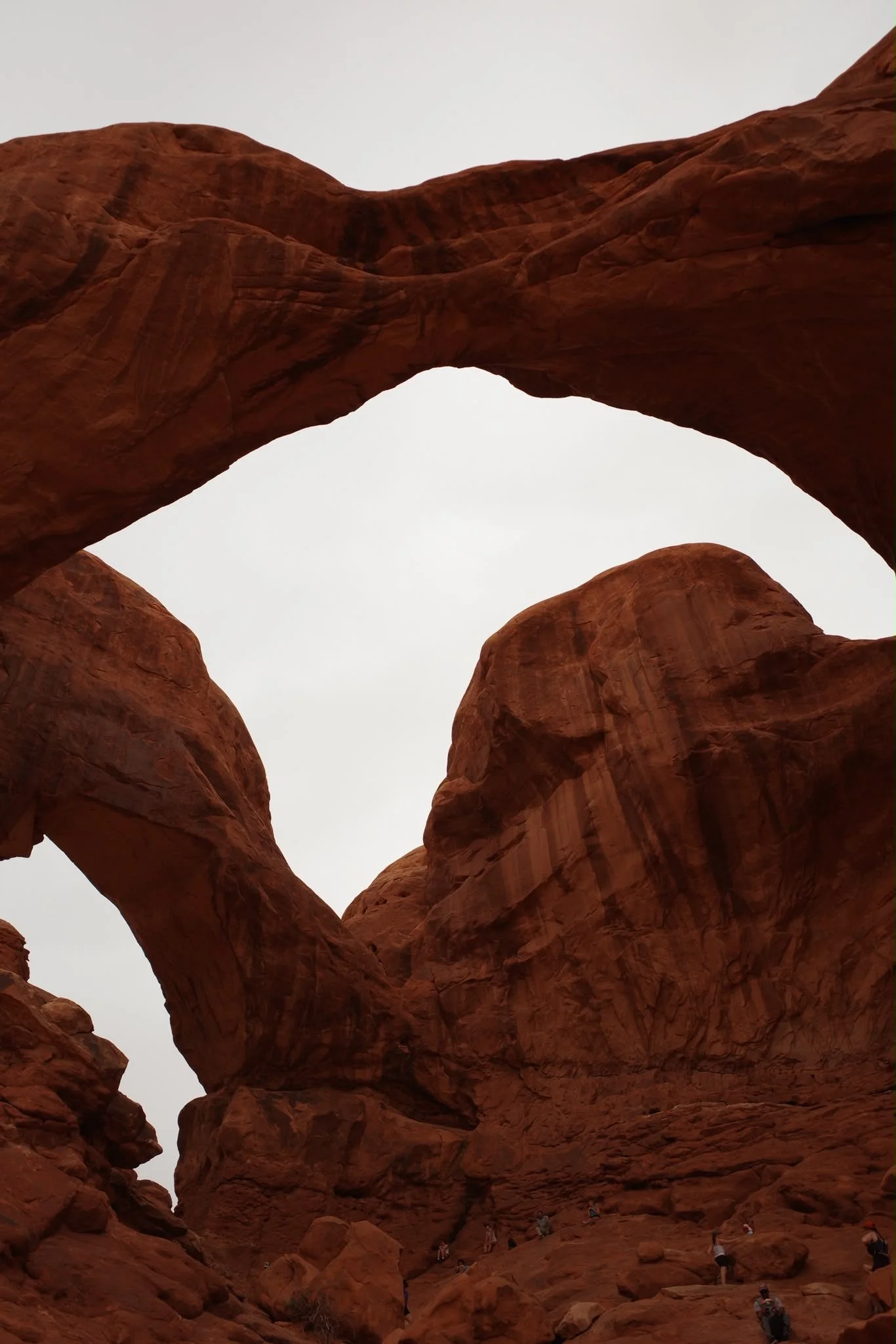
Photo Credit: Arches National Park, The Culture Digest
One of the most memorable ways to experience Arches is after the sun has disappeared. Far from major cities and with very little artificial light, the park's desert landscape becomes almost completely transformed after dark. The same arches and rock formations that dominate the daytime become silhouettes beneath an enormous sky filled with stars.
There is something particularly atmospheric about seeing Delicate Arch or Balanced Rock under moonlight, when the colour and scale of the landscape give way to shadow and silence. It is a reminder that Arches isn't simply somewhere to drive through and photograph; it is a place to experience at different times of day, when the changing light continually alters the character of the landscape.
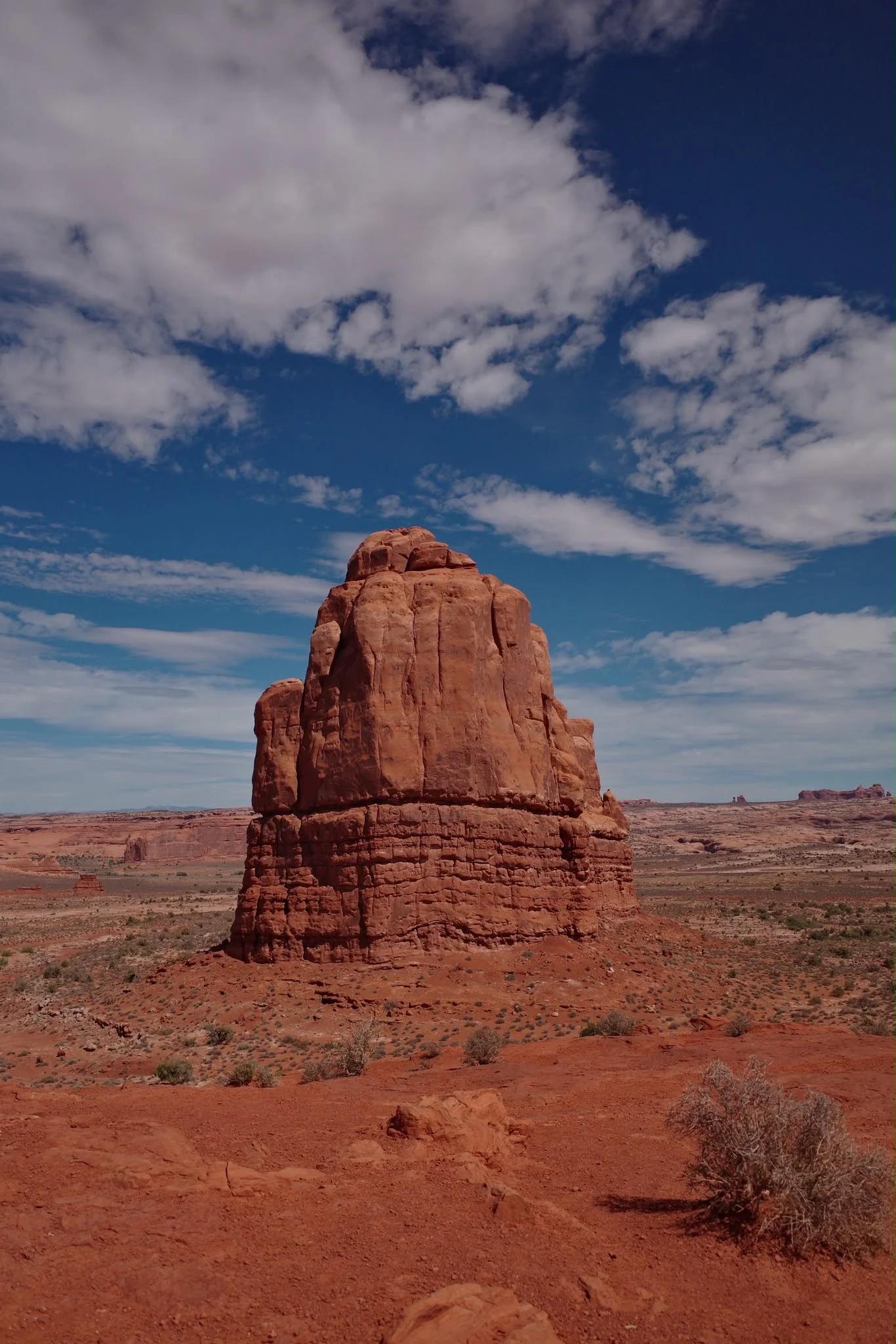
Photo Credit: Arches National Park, The Culture Digest
What makes Arches such a standout among America's national parks is its sheer sense of drama. There are no endless forests or alpine lakes here. Instead, it is a landscape defined by extraordinary shapes, scale and proportion, where every turn seems to reveal something more improbable than the last.
Drive through the park and you encounter formations with names that sound almost fictional, The Three Gossips, Courthouse Towers, Park Avenue, Fiery Furnace and Devils Garden. Each has its own character, and together they create a landscape that can feel almost surreal.
And despite its grandeur, there is something wonderfully peaceful about Arches. Away from the main roads and viewpoints, the silence of the desert becomes part of the experience. The absence of noise allows the landscape itself to take centre stage.
Perhaps that is ultimately what makes Arches so compelling. It is beautiful, but it is also a lesson in time. These vast sculptures were not created overnight, and they will not remain unchanged forever. Every crack, curve and arch is part of an ongoing process of erosion that began millions of years ago and continues today.
For anyone exploring Utah, Arches National Park should be high on the list.